Latarnia
Bad luck to kill a seabird
Latarnia is a horror game where the player interacts with the environment to try to escape from a lighthouse in poland.
Every interaction has consequences. The player's stuck in one room, but every time they go up the stairs the time moves forward and they can see the effects of their actions. However, if they don't like the changes they can always go one step back by going downstairs.
There are many endings for the player to discover.
PROJECT INFO
DEVELOPMENT TIME
3 weeks
DATE
Summer 2020 - 4th Semester
PLATFORM
PC / Itch.io
TEAM
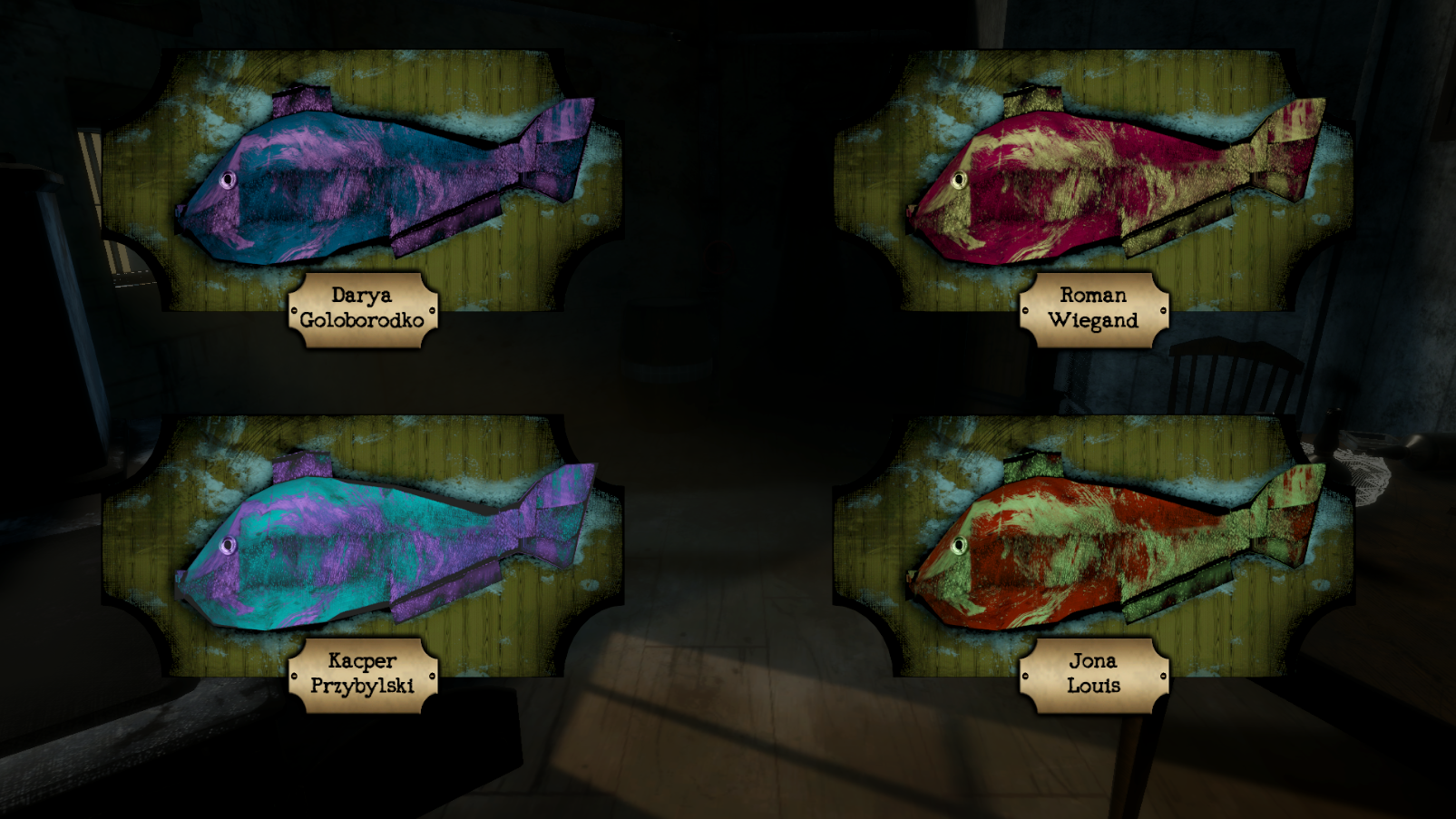
Darya Goloborodko, Jona Louis,
Kacper Przybylski, Roman Wiegand
Team JodaRok
COACHES
Prof. Susanne Brandhorst
Prof. Thomas Bremer
INSTITUTION
DE:HIVE @HTW Berlin

DEVELOPMENT
Latarnia - Bad Luck to Kill a Seabird is an athmospheric horror experience and developed as part of a three weeks experimental Game Jam in my 4th semester at HTW Berlin.
The main topic for this project was the butterfly effect.
In the game, the player takes controler over a lighthouse keeper in poland.
In the room of the lighthouse, the player will find different objects to interact with. Each Object will have a different impact on the progression of the game. To proceed, the player will have to walk upstairs and will be entering the same room again. The room however has changed and a new event will happen.
All Previous interactions will influence the outcome of the events and the ending of the game.
The development was all about fun and express our strength but also develop new skills and methods of developing a full game within a very limited time from scratch.
Due to the motivation and a good balance of our Team, we managed to create the rough concepts and blockouts within the first few days.
MY TASKS
GAME DESIGN
3D Modelling
Lighting
UI/UX DESIGN
VFX
Sound Records & Voice Acting
We designed the game idea, different timelines and endings together as a team.
For this project, I created the 3d models for the room architecture as well as most furniture props.
To get a dark sailors moonlight theme into place, I created the light setup with just 3 main lightsources. The first beeing the moon light shining through the window as an ambient. The second beeing the player's light orange lantern light to have a good contrast to the dim blueish ambient. The third main source is the bright lighthouse light spinning around on top of the building. All though it doesn't make too much sense to brighten up the room so intensly, it does have a heavy impact on the overall atmosphere and giving it a surreal touch.
Notable mention:
Due to the heavy time constraints, we were very limited on optimizing several performance issues happening during the heavy volumetric light sequences.
As part of my task, I did find an alternative solution with Unity's Shader Graph. but hasn't made it into the game aftwards unfortunatly. Our final solution in the end was the HDRP build in Volumetric Fog which happened to be still experimental at that time.
Pandemic Challenge:
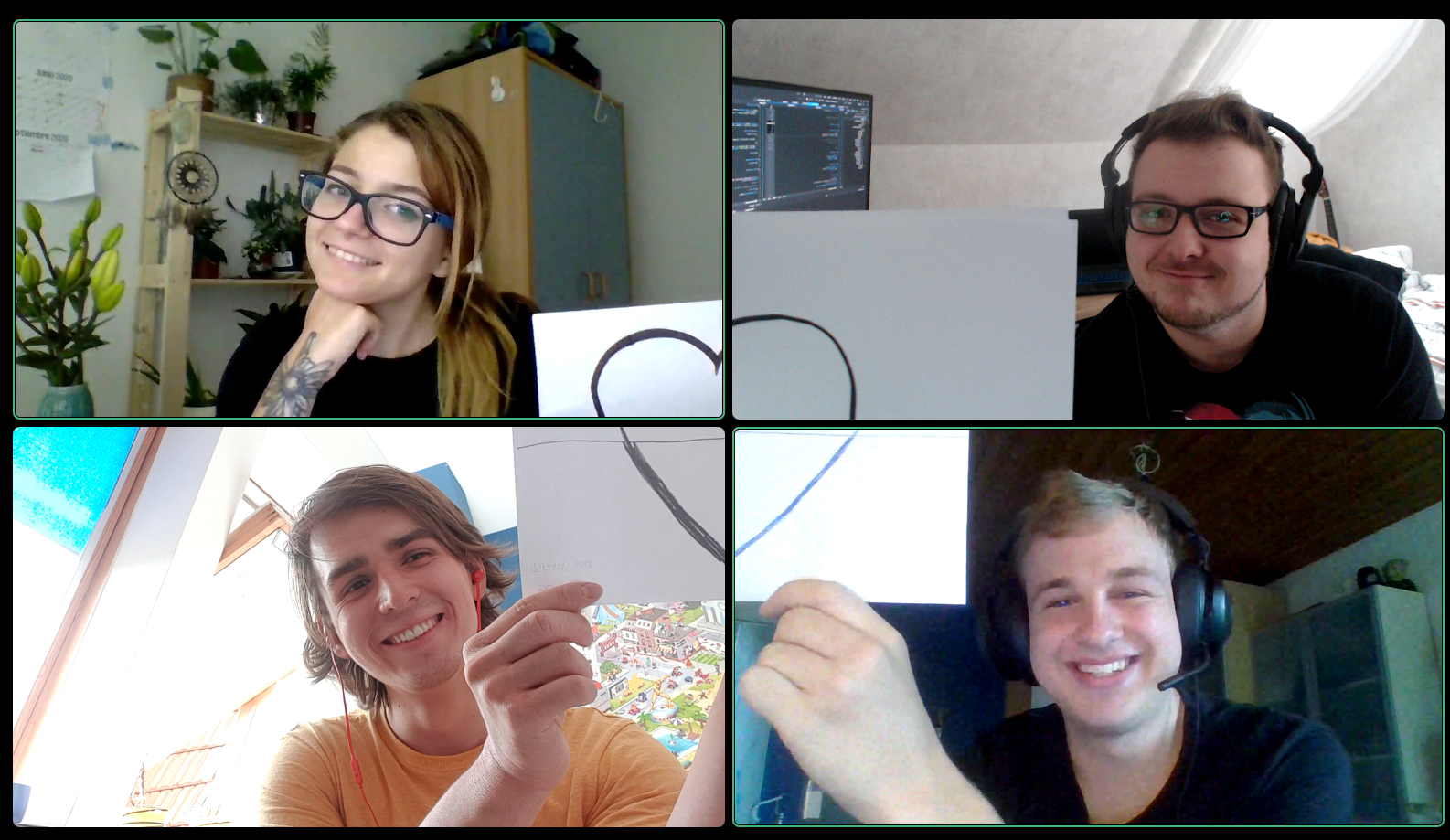
Due to the pandemics in 2020, we got quit lucky with our university and personal setups of which we were able to still comfortably create games together. Allthough it was quit the challenge to manage and organise the project remote only.
With an intelligent use of discord for communication and Miro as an online whiteboard solution, we were able to quickly solve several issues in just one strike.
Since then, miro has been a huge part of all upcoming projects within most times I have worked with afterwards.
Concept Designs & Prototype
The Team